

Marketplace Storefront Analysis Engine Overview
The Marketplace Storefront Analysis Engine evaluates seller storefronts on marketplace platforms (like Amazon) against configured policies. It scrapes product listings, analyzes content and images, and assesses compliance with policy rules.Engine Inputs
The Marketplace Storefront Analysis Engine Configuration has the following parameters:- storefront_url: optional. The marketplace storefront URL to analyze (e.g., Amazon seller page).
- policy_version_id: optional. Policy version ID containing the compliance rules to evaluate against.
Engine Output
The output includes a comprehensive storefront analysis:Example Usage
1
Create a Compliance Policy
First, create a Policy in the Policies section with your marketplace compliance rules and categories.
2
Create an Agent
Click on the “Add Agent” button in the top right corner of the Agents page.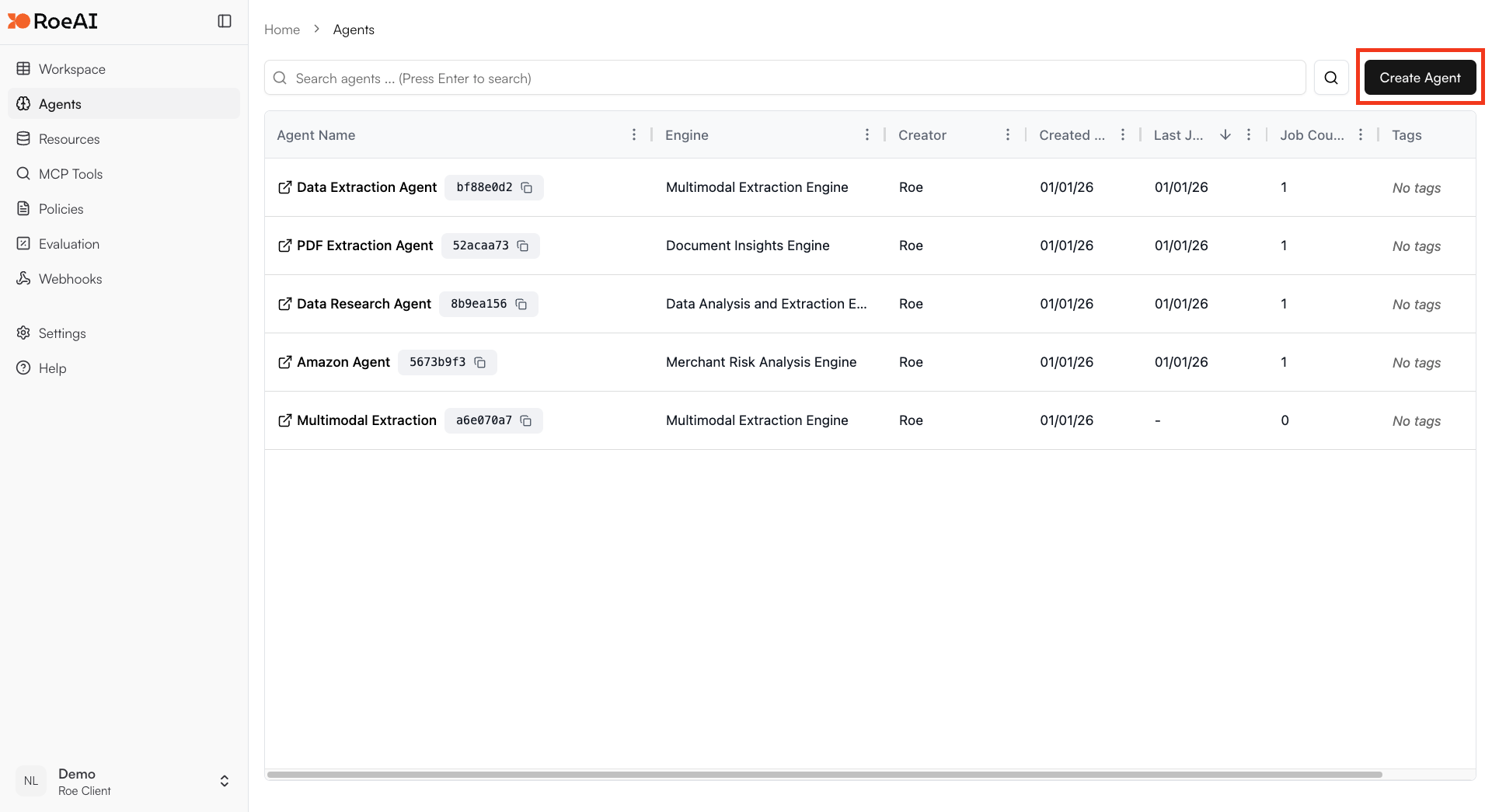
3
Select the Marketplace Storefront Analysis Engine
4
Configure the engine
$ starts a template string
- storefront_url: $storefront_url
- policy_version_id: (select your policy version)
5
Create the Agent
Hit the Create button.
6
Run a job
Create a new job and provide the storefront URL to analyze.
Analysis Process
The engine performs these steps:- Scrape storefront: Extract product listings from the marketplace
- Extract content: Gather text and images from products
- Policy evaluation: Assess each policy category against the content
- Risk aggregation: Combine metrics into overall risk assessment
Use Cases
- Seller vetting: Evaluate new sellers before marketplace approval
- Compliance monitoring: Ensure sellers meet marketplace policies
- Quality assessment: Evaluate product listing quality
- Brand protection: Identify potential counterfeit or policy-violating sellers
- Periodic audits: Re-evaluate existing seller storefronts